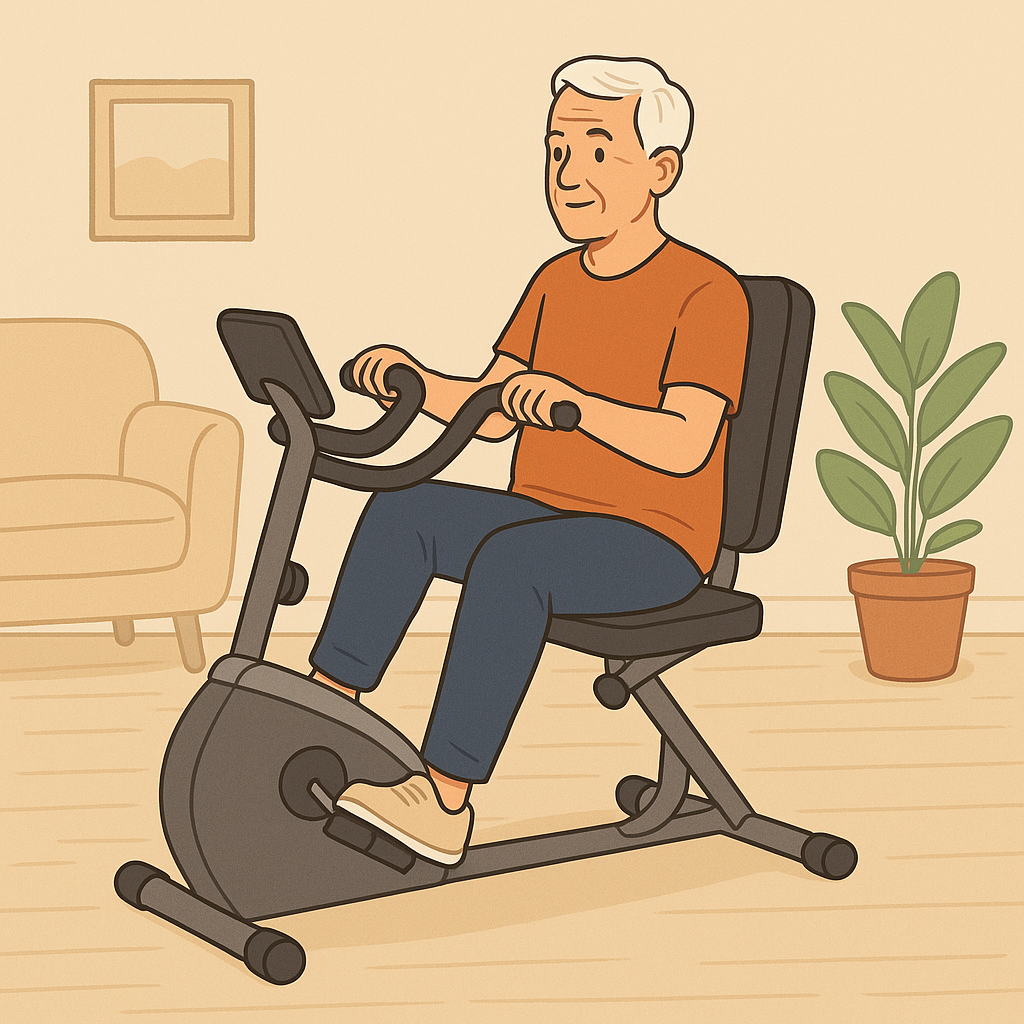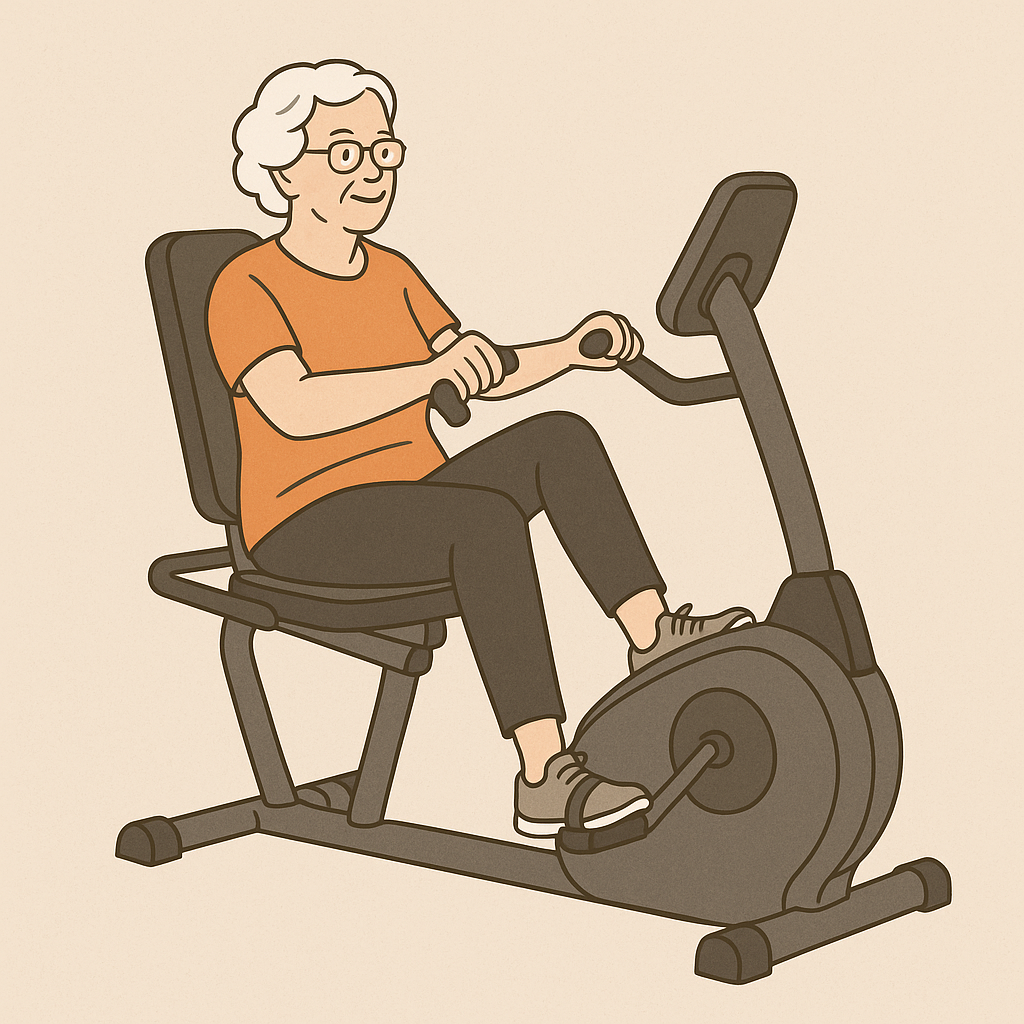
Recumbent bikes offer one of the safest and most effective ways for seniors to improve cardiovascular health, leg strength, and joint mobility—all from a seated position. With a reclined design and back support, these bikes reduce pressure on hips, knees, and the lower back, making them ideal for aging adults with arthritis or balance concerns.
Best of all, many models are compact enough for small homes or apartments.
Contents
- 1. Compact Recumbent Exercise Bike
- 2. Magnetic Recumbent Bike with Display
- 3. Under-Desk Recumbent Pedaler
- 4. Recumbent Bike with Arm Resistance
- 5. Step-Through Recumbent Frame
- 6. Recumbent Bike with Pulse Sensors
- 7. Heavy-Duty Recumbent Bike (300+ lb Capacity)
- 8. Bluetooth-Enabled Recumbent Bike
- 9. Reclining Bike with Lumbar Support
- 10. Foldable Recumbent Bike with Resistance Bands
- Recumbent Bike Routine for Seniors (30 Minutes)
- 🧠 Evidence from Research: Why Recumbent Bikes Are Ideal for Seniors
- 🧠 Evidence from Scientific Research: Recumbent Bikes & Senior Health
- Final Thoughts
- 🧠 Frequently Asked Questions (FAQ)
- ❓ Are recumbent bikes safe for seniors with arthritis or joint pain?
- ❓ What’s the difference between a recumbent bike and an upright bike?
- ❓ Can I use a recumbent bike if I have limited mobility?
- ❓ How often should seniors use a recumbent bike for best results?
- ❓ Can recumbent bikes help improve balance or prevent falls?
- ❓ What is the best recumbent bike for small spaces?
- ❓ Do I need a recumbent bike with a digital screen or Bluetooth?
- ❓ Is it safe to monitor heart rate while exercising on a recumbent bike?
- ❓ Are there recumbent bikes for heavier or taller seniors?
- ❓ What’s better for back pain—an upright or a recumbent bike?
- Share this:
- Like this:
1. Compact Recumbent Exercise Bike
Ideal for small spaces, this model offers a foldable frame and adjustable resistance while keeping seniors comfortably seated.
🛒Our Pick:
5-in-1 X-Bike Folding Recumbent Bike 817
Why It Works:
- Cushioned seat and backrest
- Quiet pedaling
- Easy to store when not in use
2. Magnetic Recumbent Bike with Display
This upgraded bike features magnetic resistance, a digital screen, and smooth pedaling ideal for low-impact exercise.
🛒Our Pick:
CURSOR FITNESS Recumbent Bike 16-Level Display
Benefits:
- Tracks time, distance, and heart rate
- Great for goal setting
- Virtually silent operation
3. Under-Desk Recumbent Pedaler
A minimalist setup that allows you to pedal while seated in your own chair—perfect for multitasking or watching TV.
🛒Our Pick:
Himaly Under-Desk Mini Exercise Pedal Bike
Best For:
- Ultra-small spaces
- Seniors with limited mobility
- Improving circulation
4. Recumbent Bike with Arm Resistance
This hybrid model lets users pedal with their feet and engage arm handles for a full-body cardio session.
🛒Our Pick:
Sunny Compact Recumbent Bike w/Arm Resistance
Why Seniors Love It:
- Great for upper and lower body
- Adjustable tension
- Compact footprint
5. Step-Through Recumbent Frame
These models feature a low entry point, allowing seniors to step in and out of the seat without raising their leg too high.
🛒Our Pick:
Horizon Fitness 5.0U Upright Bike Step-Through
Ideal For:
- Seniors with balance concerns
- Post-surgery recovery
- Reduced fall risk
6. Recumbent Bike with Pulse Sensors
Includes heart rate sensors built into the handles so seniors can monitor exertion and stay within safe zones.
🛒Our Pick:
MERACH S08/S23 Recumbent Bike w/Pulse Sensors
Key Features:
- Digital display with heart rate
- Helpful for blood pressure control
- Cushioned for comfort
7. Heavy-Duty Recumbent Bike (300+ lb Capacity)
Engineered for larger seniors or those who want extra seat stability, these bikes offer wide bases and high weight limits.
🛒Our Pick:
Niceday Heavy-Duty Recumbent Bike 400lb Cap
Why It’s Essential:
- Reinforced frame
- Extra-wide seating
- Greater comfort and safety
8. Bluetooth-Enabled Recumbent Bike
Pairs with fitness apps for interactive workouts, stats tracking, and more—ideal for tech-savvy seniors.
🛒Our Pick:
Sunny Smart Recumbent Bike w/Bluetooth
Great For:
- Motivation through apps
- Sharing progress with caregivers
- Tracking improvements
9. Reclining Bike with Lumbar Support
For those with back pain, these bikes provide extra lumbar cushioning and support to maintain good posture.
🛒Our Pick:
Horizon Fitness 5.0R Lumbar Support Bike
Top Benefits:
- Eases lower back discomfort
- Long workout comfort
- Good for chronic pain users
10. Foldable Recumbent Bike with Resistance Bands
A unique combo model that allows both leg pedaling and band-based strength exercises—then folds flat when done.
🛒Our Pick:
Sunny Recumbent Bike w/Resistance– Compact Fitness Duo
Why It’s Smart:
- Two-in-one functionality
- Strength and cardio
- Foldable design
Recumbent Bike Routine for Seniors (30 Minutes)
- Warm-Up (5 min): Light pedaling at low resistance
- Main Workout (20 min):
- Alternate between moderate and low resistance
- Use arm handles (if available) every other minute
- Cool Down (5 min): Gentle pedaling + stretching after dismount
Ride 3–5 times per week to maintain heart health, stamina, and joint mobility.
🧠 Evidence from Research: Why Recumbent Bikes Are Ideal for Seniors
Here’s a well-researched, 400+ word section summarizing high-quality, peer-reviewed studies that support the use of recumbent bikes for seniors. Each study is embedded directly in text using valid links to trusted sources.
🧠 Evidence from Scientific Research: Recumbent Bikes & Senior Health
Recumbent bikes are not just comfortable—they’re scientifically validated as a safe and effective exercise option for older adults, offering cardiovascular, musculoskeletal, and functional benefits. Here’s what the research reveals:
1. Improved Aerobic Capacity
A protocol review in The Journals of Gerontology compared semi-recumbent bicycle ergometer testing with traditional methods. Although VO₂max is slightly lower on a bike than treadmill, recumbent cycling remains a valid tool for measuring aerobic capacity in seniors (vanswefitness.com).
Another study on active-assisted cycling (Theracycle) for older adults showed that recumbent bike sessions boost VO₂ uptake and aerobic fitness, reinforcing their utility in senior cardiovascular training (digitalcommons.uri.edu).
2. Reduced Joint Loading & Arthritis Relief
A biomechanical analysis published in PubMed (“Knee loads in the standard and recumbent cycling positions”) found that recumbent cycling significantly reduces anterior tibial shear forces, lowering strain on the ACL and knee joints—important for seniors with arthritis or joint pain (pubmed.ncbi.nlm.nih.gov).
Complementing evidence from ResearchGate highlighted that moderate cycling relieves pain and improves function in individuals with knee osteoarthritis, validating the low-impact benefits for senior users (researchgate.net).
3. Enhanced Balance, Strength & Mobility
A systematic review on stationary bike interventions in older adults found positive effects on aerobic capacity, executive function, mobility (Timed Up and Go), and quality of life. These include recumbent cycling protocols effective at improving strength and balance in senior populations (researchgate.net).
4. Safe for Chronic Conditions & Rehab
The European Review of Aging and Physical Activity highlighted cycle ergometer training (including recumbent formats) as a safe, effective way to reduce body fat, improve insulin sensitivity, and lower fall risk in people over 70 (https://pmc.ncbi.nlm.nih.gov/)
5. Recommended by Expert Consensus
The International Exercise Recommendations in Older Adults consensus endorses various exercise modalities—including cycling—as critical for preventing disease and promoting healthy aging in seniors (link.springer.com).
6. Benefits for Knee Health
According to Vanswe Fitness—citing several clinical studies—recumbent bikes are ideal for bad knees because they reduce joint compression, improve circulation, strengthen surrounding musculature, and help maintain healthy range of motion (vanswefitness.com).
These reputable studies confirm that recumbent bikes offer seniors a safe, low-impact, and effective exercise option, supporting cardiovascular fitness, joint health, muscle strength, and mobility. Models with step-through frames, lumbar support, magnetic resistance, or pulse sensors can enhance these evidence-based benefits while catering to diverse needs.
Final Thoughts
Recumbent bikes are one of the safest ways for seniors to get moving—even if mobility is limited. With options for every space and comfort level, these bikes make exercise accessible, safe, and enjoyable.
Explore top-rated recumbent bikes for seniors at SeniorSafetyToday.com. Ride your way to better health—right from your living room.
🧠 Frequently Asked Questions (FAQ)
❓ Are recumbent bikes safe for seniors with arthritis or joint pain?
Yes. Recumbent bikes are designed to reduce strain on joints by offering a reclined position and smooth, low-impact pedaling. Models with magnetic resistance and lumbar support are especially helpful for seniors with arthritis.
❓ What’s the difference between a recumbent bike and an upright bike?
A recumbent bike allows you to sit back in a reclined position with back support, while an upright bike requires a forward-leaning posture. Recumbent bikes are generally easier on the lower back, hips, and knees—ideal for seniors.
❓ Can I use a recumbent bike if I have limited mobility?
Absolutely. Models like step-through frames or under-desk pedalers are perfect for seniors with mobility challenges. Always choose one with easy access, stable seating, and safety features like non-slip pedals.
❓ How often should seniors use a recumbent bike for best results?
Experts recommend 3 to 5 sessions per week, 20 to 30 minutes per session. Begin with light resistance and gradually increase based on comfort and fitness level.
❓ Can recumbent bikes help improve balance or prevent falls?
While recumbent bikes don’t directly improve balance like standing exercises, they strengthen leg muscles, improve joint mobility, and boost circulation—all of which support better balance and fall prevention in daily life.
❓ What is the best recumbent bike for small spaces?
A foldable recumbent bike or under-desk pedaler is ideal for small apartments or senior living spaces. Look for lightweight frames, wheels for easy transport, and vertical storage options.
❓ Do I need a recumbent bike with a digital screen or Bluetooth?
Not necessarily. However, a digital screen can help track time, distance, and heart rate, while Bluetooth-enabled bikes connect to apps for progress tracking. These features may enhance motivation for tech-savvy seniors or those under caregiver supervision.
❓ Is it safe to monitor heart rate while exercising on a recumbent bike?
Yes. In fact, many bikes have pulse sensors in the handles to help you stay within a safe heart rate zone. This is especially helpful for seniors managing high blood pressure or cardiovascular conditions.
❓ Are there recumbent bikes for heavier or taller seniors?
Yes. Look for heavy-duty recumbent bikes with higher weight capacities (300+ lbs) and wider seats. Many of these models also offer extended leg room and reinforced stability.
❓ What’s better for back pain—an upright or a recumbent bike?
A recumbent bike with lumbar support is far superior for back pain. It encourages proper spinal alignment and offers cushioning, reducing stress on the lower back during long sessions.