Affiliate Disclosure:
Some links in this article are affiliate links. If you click and make a purchase, SeniorSafetyToday.com may earn a small commission at no extra cost to you. We only recommend products we believe support the safety, independence, and well-being of seniors.
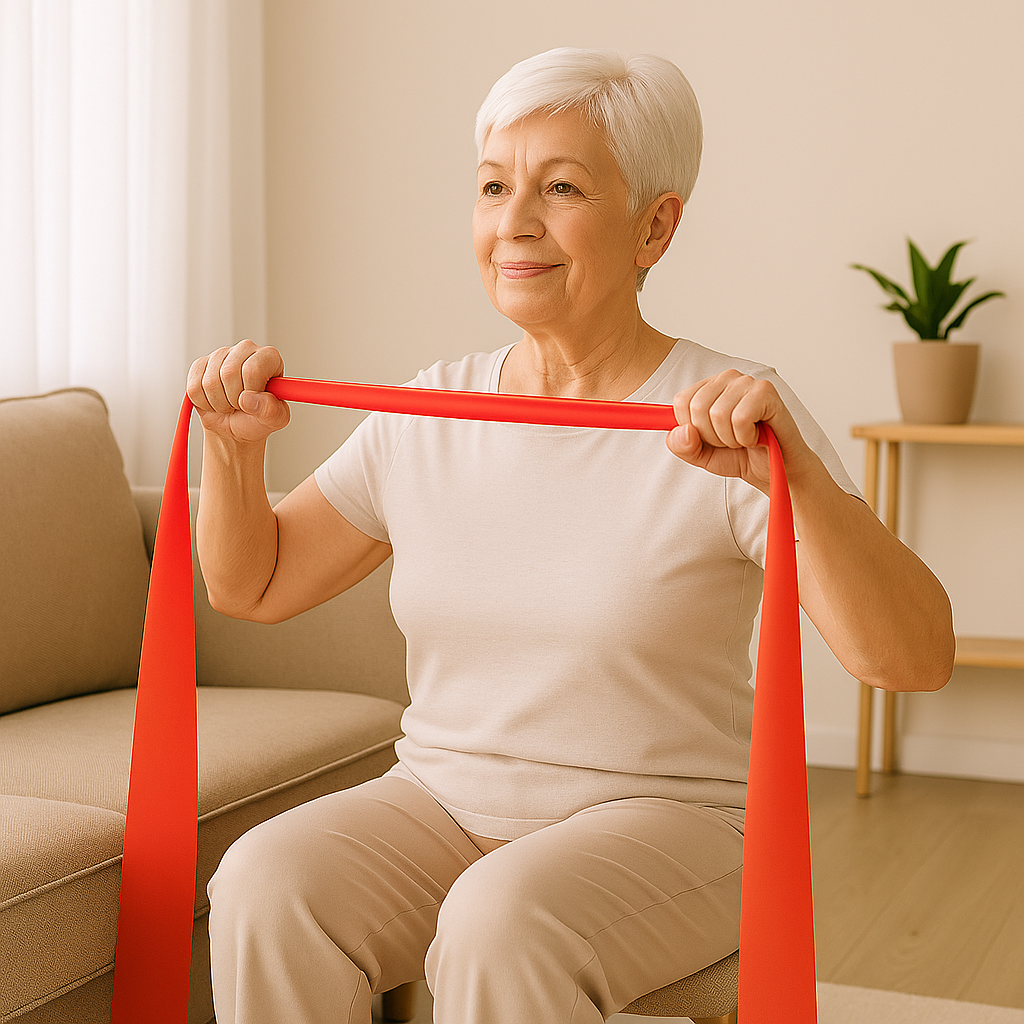
Resistance bands are a low-cost, versatile, and space-saving way for seniors to build strength and improve flexibility. Whether you’re recovering from injury or simply looking to stay fit without heavy weights, resistance bands offer an excellent way to perform strength training from a seated or standing position—all with minimal joint stress.
This guide explores the best resistance bands for seniors, how to use them safely, and which types work best in small spaces or home environments.
Contents
- Key Benefits of Using Resistance Bands
- 1. Flat Therapy Bands
- 2. Loop Resistance Bands
- 3. Tube Bands with Handles
- 4. Resistance Bands with Door Anchor
- 5. Resistance Bands with Instruction Guide
- 6. Fabric Resistance Bands
- 7. Resistance Band Sets with Levels
- 8. Long Resistance Bands
- 9. Resistance Bands with Foot Straps
- 10. Resistance Bands with Storage Bag
- How to Use Resistance Bands Safely
- Sample Resistance Band Routine for Seniors
- Tips for Choosing the Right Resistance Band
- Common Mistakes to Avoid with Resistance Bands
- Final Thoughts
- FAQ: Resistance Bands for Seniors – Strength Training Without Weights
- What are the best resistance bands for seniors to build strength without weights?
- Are resistance bands safe for seniors with limited mobility?
- What resistance bands are good for seniors who want to improve balance?
- How can seniors safely use resistance bands at home?
- Are fabric resistance bands better than rubber bands for seniors?
- What resistance bands are easiest for travel or storage?
- Share this:
- Like this:
Key Benefits of Using Resistance Bands
Resistance bands are one of the most accessible and effective tools for senior fitness. Unlike bulky gym equipment, these lightweight bands can easily be incorporated into daily routines for strength, flexibility, and mobility improvements. Here’s why resistance bands are an ideal solution for seniors looking to stay active:
- Strength Building Without Weights: Resistance bands provide enough tension to strengthen muscles, making them excellent for preserving muscle mass and bone density. This is especially important for seniors, as muscle loss and osteoporosis are common age-related issues. Bands can mimic most free-weight or machine-based exercises, but without the risk of dropping heavy weights.
- Improved Flexibility and Mobility: Regular stretching and strength exercises with resistance bands help keep joints flexible and muscles limber. Seniors who use resistance bands often notice better range of motion, reduced stiffness, and an easier time performing daily activities like reaching, bending, and walking.
- Joint-Friendly and Low-Impact: Unlike free weights or some gym machines, resistance bands do not place unnecessary strain on joints. The controlled movement and variable resistance are gentler on knees, hips, shoulders, and wrists. This makes resistance bands especially useful for those with arthritis, joint pain, or anyone recovering from injury.
- Suitable for Small Spaces: Resistance bands take up virtually no room. They can be stored in a drawer, a tote, or even a travel pouch. Seniors living in apartments, retirement communities, or homes with limited space will appreciate that bands provide a full-body workout without requiring dedicated gym space.
In summary, resistance bands offer a safe, affordable, and highly effective means of maintaining strength, balance, and independence at any age.
1. Flat Therapy Bands
Simple flat bands without handles, great for physical therapy and stretching.
🛒Our Pick:
Why They’re Ideal:
- Easy to wrap or anchor
- Lightweight and gentle
- Great for beginners
2. Loop Resistance Bands
Closed-loop bands perfect for lower body exercises and stability training.
🛒Our Pick:
Perfect For:
- Leg lifts
- Glute strengthening
- Seated or standing work
3. Tube Bands with Handles
Resistance tubes with ergonomic grips for upper body workouts.
🛒Our Pick:
Fit Simplify Resistance Tube Bands 12 Piece Set with Instruction Booklet
Top Benefits:
- Comfortable grip
- Ideal for bicep curls, chest presses
- Adjustable resistance options
4. Resistance Bands with Door Anchor
Includes an anchor that fits into any doorframe for added exercise variety.
🛒Our Pick:
Why Seniors Like It:
- Mimics gym machines
- Great for back and shoulder work
- Portable and convenient
5. Resistance Bands with Instruction Guide
Comes with an exercise booklet or chart for safe, senior-friendly routines.
🛒Our Pick:
Best For:
- Seniors new to fitness
- Visual learners
- Avoiding injury
6. Fabric Resistance Bands
Soft-touch bands that don’t roll or pinch like rubber versions.
🛒Our Pick:
Ideal For:
- Seniors with sensitive skin
- Glute and thigh workouts
- Safer, more secure feel
7. Resistance Band Sets with Levels
Includes multiple bands with varying resistance (light to heavy).
🛒Our Pick:
Perfect For:
- Building gradually over time
- Sharing with a partner
- Full-body variety
8. Long Resistance Bands
Extra-long bands ideal for full-body stretches and mobility exercises.
🛒Our Pick:
Why They’re Useful:
- Great for shoulder rolls
- Gentle spinal stretches
- Seated use for posture
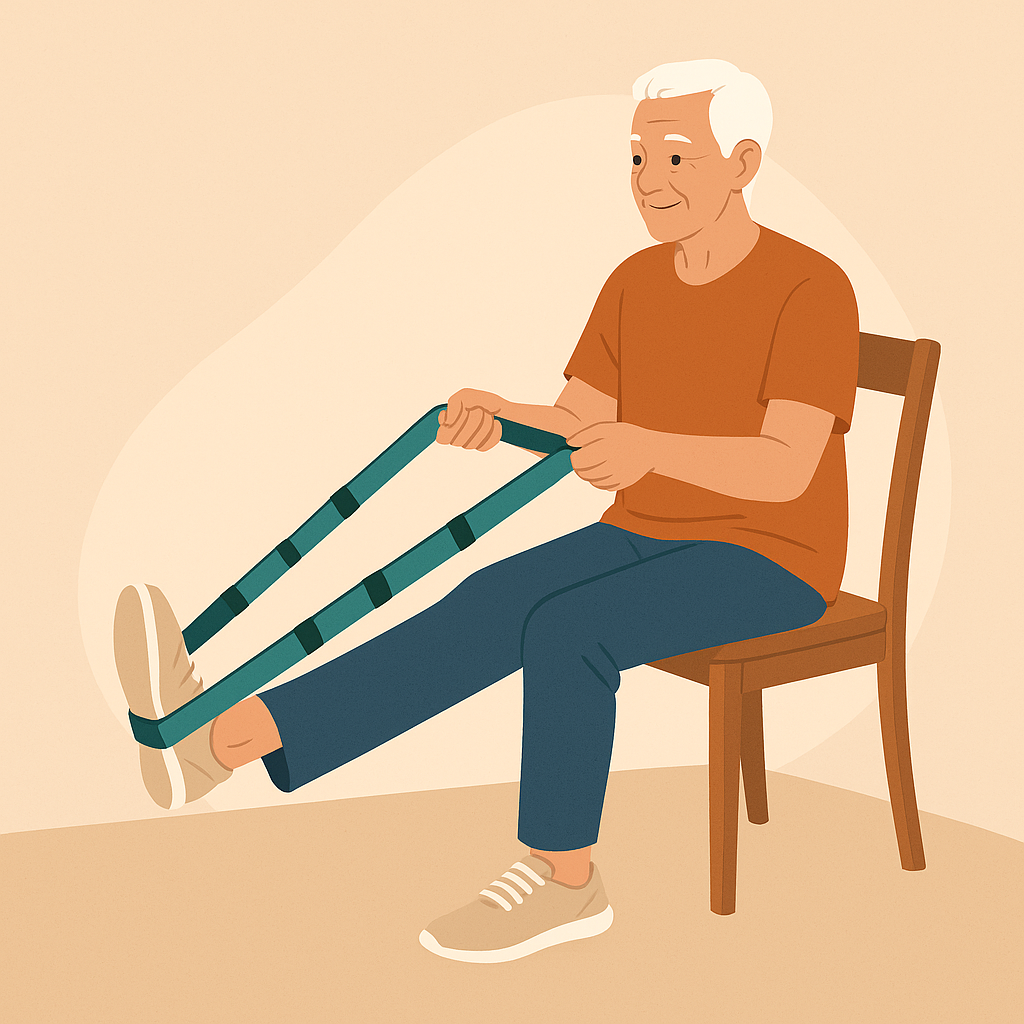
9. Resistance Bands with Foot Straps
Designed to secure around feet for lower-body strengthening.
🛒Our Pick:
Top Benefits:
- Ideal for seated hamstring curls
- No slipping
- Better targeting of leg muscles
10. Resistance Bands with Storage Bag
Includes compact travel bag for easy storage and transport.
🛒Our Pick:
Best For:
- Seniors on the move
- Keeping organized
- Daily routine anywhere
How to Use Resistance Bands Safely
While resistance bands are straightforward and safe for most seniors, following a few best practices ensures the best experience and reduces the risk of injury:
- Proper Anchoring Techniques: Always secure your resistance band to a sturdy object if you’re using door anchors or performing moves that require attachment. Many bands come with a door anchor for easy set-up—just be sure the door is closed and locked, or use a heavy, stable object for anchoring.
- Starting with Light Resistance: Seniors should begin with a lighter resistance band, especially if they’re new to strength training or are coming back after an injury. Gradually increase to medium or heavy bands as your strength and confidence grow.
- Inspecting Bands for Wear and Tear: Before every session, check your bands for any signs of wear, cracking, or tears. Damaged bands can snap and cause injury. Replace worn bands promptly, and always follow manufacturer recommendations for care and storage.
- Using Slow and Controlled Movements: Avoid quick, jerky, or explosive movements. Instead, focus on smooth, controlled stretching and contracting of the band. This approach maximizes muscle engagement and minimizes the chance of pulling a muscle or overextending a joint.
- Maintaining Proper Posture: Whether you’re seated or standing, keep your back straight and your core engaged. Good posture not only prevents strain but also ensures you’re working the correct muscle groups.
By following these safety tips, seniors can get the most out of their resistance band workouts while staying protected.
Sample Resistance Band Routine for Seniors
An effective resistance band routine for seniors can be completed in 15–20 minutes, making it easy to fit into your daily schedule. Here’s a simple, full-body workout:
Warm-Up (3 minutes):
- Gentle shoulder circles with or without a band
- Arm swings across the body
- Marching in place or seated marching
Main Strength Exercises (10–12 minutes):
- Seated Chest Press (Flat Band): Sit in a sturdy chair. Loop the band around your upper back and grasp both ends. Extend arms forward, pressing against the band’s resistance, then return slowly.
- Bicep Curls (Tube Band with Handles): Stand or sit with both feet on the band. Hold the handles and curl your arms upward toward your shoulders, then lower with control.
- Side Leg Lifts (Loop Band): Place a loop band around your thighs (just above the knees). While seated or standing, lift one leg to the side, hold, and return. Alternate legs.
- Overhead Arm Stretch (Long Band): Hold a long band overhead with both hands. Gently pull your arms apart, feeling a stretch across your shoulders and upper back.
Cool Down (2–3 minutes):
- Gentle stretches using the band to support legs and arms
- Deep breathing to relax and reset
Perform this routine 3–5 times per week, gradually increasing repetitions or resistance as you grow stronger.
Tips for Choosing the Right Resistance Band
With so many resistance bands on the market, choosing the right set ensures comfort, safety, and long-term success:
- Selecting Resistance Level: Most brands offer bands in varying strengths (light, medium, heavy). Beginners or those with limited strength should start with light resistance. As strength increases, progress to heavier bands or sets with multiple resistance levels.
- Comfort Features: Handles, fabric coatings, and foot straps can improve comfort, especially for seniors with sensitive skin or arthritis. Fabric bands are less likely to roll or pinch than latex versions.
- Size and Storage Considerations: Long bands are versatile for stretching and tall users, while shorter loop bands are best for legs and glutes. If you travel often or want to exercise in different rooms, choose bands that come with a compact storage pouch.
Selecting the right resistance band setup can make all the difference in maintaining a consistent and enjoyable exercise habit.
Common Mistakes to Avoid with Resistance Bands
To maximize the benefits and prevent injury, seniors should avoid these common mistakes:
- Using a band that is too tight or too loose for their ability
- Anchoring to unstable or breakable objects
- Skipping warm-ups or cool-down stretches
- Ignoring signs of band wear or discomfort during exercise
- Progressing to heavier resistance before mastering proper form
By staying mindful and patient, seniors can enjoy safe, effective resistance band workouts for years to come.
Final Thoughts
Resistance bands are one of the most accessible and effective exercise tools for seniors. They take up virtually no space, provide countless variations, and make strength training possible even for beginners or those with joint limitations.
Discover the best resistance bands for seniors today at SeniorSafetyToday.com. Strength, stretch, and confidence—anywhere, anytime.
Learn More with Senior Safety Today
Check out our great resources to learn more:
- 10 Affordable Senior Workout Tools You Can Use Anywhere
- Best Compact Ellipticals for Seniors: Low-Impact Cardio Without the Bulk
- Top Yoga Wheels for Seniors: Gentle Back Openers for Flexibility and Posture
- Top Inversion Tables for Seniors
- Top Hand Exercise Equipment for Seniors: Improve Grip Strength and Dexterity at Home
FAQ: Resistance Bands for Seniors – Strength Training Without Weights
Get answers to common questions about using resistance bands safely and effectively for senior fitness, flexibility, and strength training at home.
What are the best resistance bands for seniors to build strength without weights?
Tube bands with handles and resistance band sets with levels are great for building upper body and core strength. They offer adjustable tension and ergonomic grips that support safe strength training without heavy equipment.
Are resistance bands safe for seniors with limited mobility?
Yes, flat therapy bands and long resistance bands are ideal for seniors with mobility challenges. They can be used while seated, and offer gentle resistance that’s easy on joints and muscles.
What resistance bands are good for seniors who want to improve balance?
Loop resistance bands and resistance bands with foot straps help strengthen the hips, thighs, and glutes—key areas for improving balance and reducing the risk of falls.
How can seniors safely use resistance bands at home?
Use bands with a door anchor or choose sets that come with an instruction guide to ensure proper form. Start with low resistance, perform slow controlled movements, and always inspect bands before use.
Are fabric resistance bands better than rubber bands for seniors?
Yes. Fabric resistance bands are wider, softer, and don’t roll or pinch. They’re especially comfortable for lower-body workouts and are ideal for seniors with sensitive skin.
What resistance bands are easiest for travel or storage?
Resistance bands with a storage bag or on-the-go kits are perfect for seniors who want to stay fit while traveling or living in smaller spaces.