A Comprehensive Guide to Choosing the Best Commode for Seniors
The best commode for seniors depends on how a person transfers, the space available, the required weight capacity, and whether the chair will be used beside a bed, over a toilet, or in a shower. A stable fit and a safe transfer plan matter more than a long list of features. This guide compares common types, explains what to check before buying, and offers practical setup and cleaning tips.
Commode comparison: common options for seniors
Rather than choosing a specific brand, compare the design that best matches the person’s mobility, transfer needs, and bathroom layout. Features and weight capacities vary by manufacturer and model.
| Commode type | Best suited for | Key features to check |
| Standard bedside | Shorter trips to the bathroom | Stable feet, adjustable height, removable bucket |
| Drop-arm | Certain lateral transfers | Arm release, seat dimensions, clearance |
| 3-in-1 | Bedside and compatible over-toilet use | Toilet fit, approved configurations, height |
| Bariatric | Wider seating or higher weight needs | Rated capacity, seat width, frame footprint |
| Rolling shower/commode | Assisted movement | Door clearance and locking wheels |
Before purchasing, confirm the exact model’s rated capacity, dimensions, assembly instructions, and intended use. If transfers are difficult or unsafe, ask an occupational or physical therapist to help select appropriate equipment.
Why a bedside commode can help
A bedside commode shortens the distance to a toilet when walking is difficult, especially overnight. It may reduce hurried trips, provide a place to sit, and support privacy. It does not automatically prevent falls: the user must still turn, lower onto the seat, stand or transfer safely, and manage clothing. Our home safety assessment offers a broader room-by-room risk review.
Types of commodes for seniors

Standard bedside commode
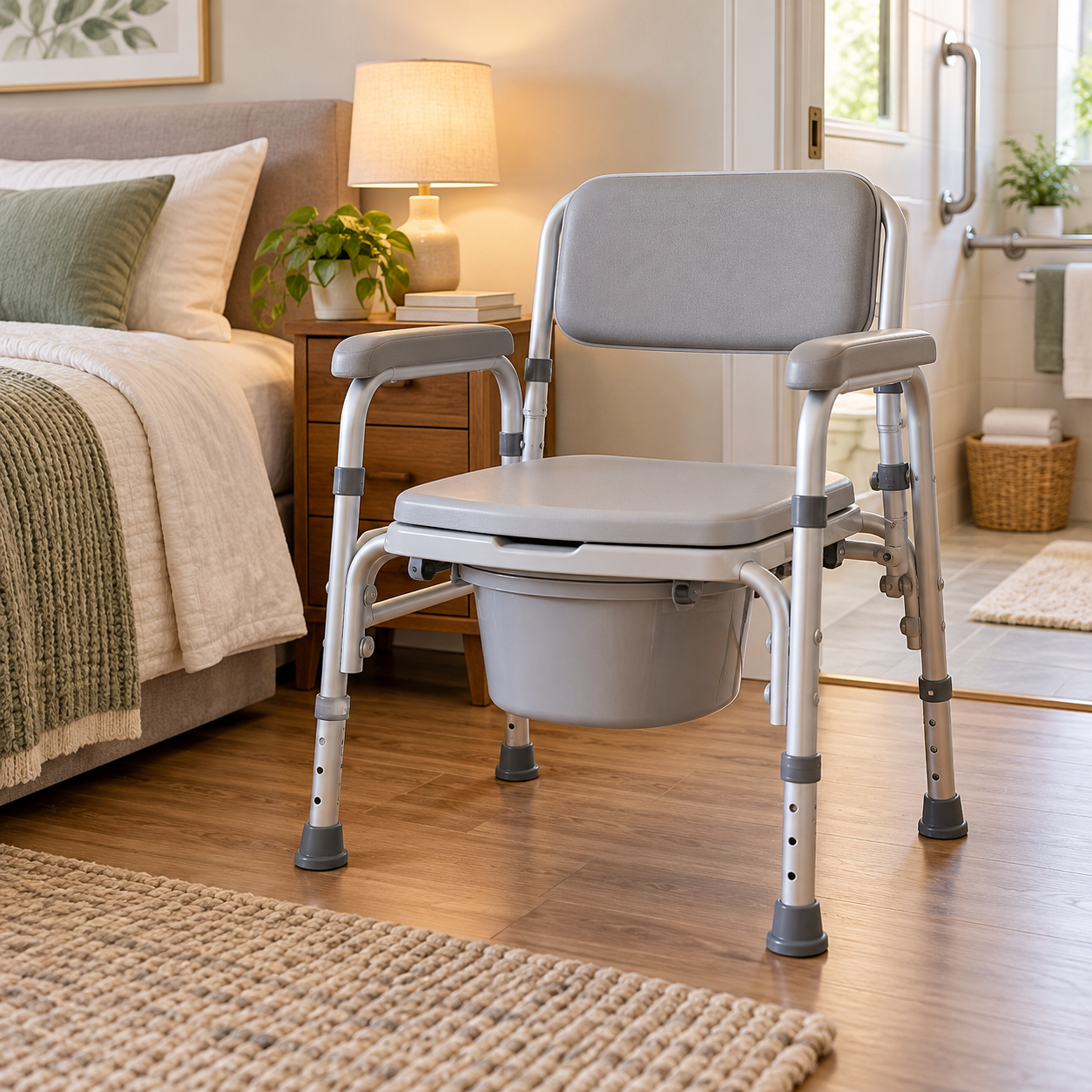
A freestanding bedside commode has a seat and removable collection bucket. Look for level, nonslip feet, a stable frame, and a height suitable for the user’s legs and transfer needs.
Drop-arm commode
A drop-arm commode has an armrest that moves out of the way for certain lateral transfers from a bed or wheelchair. The transfer technique must be appropriate for the user and their caregiver; an occupational or physical therapist can demonstrate a safe method.
3-in-1 commode chair
A 3-in-1 commode chair may serve as a bedside commode, a raised toilet support, or a toilet safety frame if the manufacturer permits those uses. Check compatibility with the home’s toilet before buying.
Bariatric commode
Bariatric commodes are designed for higher specified weight limits or wider seating. Compare actual seat width, maximum rated user weight, floor footprint, and armrest strength rather than relying on the word heavy-duty alone.
Rolling shower and commode chair
Some rolling models combine toileting and shower use. They require suitable doorway clearance, accessible shower entry, correctly applied wheel locks, and an appropriate transfer plan. Wheels should not be used as a substitute for safe handling technique.
How to choose a safe commode
Check seat height, seat width and user weight
The user’s feet should be able to rest securely on the floor or appropriate foot support, and sitting or standing should not demand excessive effort. Compare the manufacturer’s usable seat dimensions and rated weight capacity with the user’s needs. Adjustable-height models may help but still require a stable setup.
Check transfers and armrests
Ask whether the user pushes from armrests, pivots with a walker, or transfers sideways from a wheelchair. Choose arm mechanisms that suit the plan and test their operation before use. A transfer bench may be useful for some bathing tasks, but it is not a substitute for a properly fitted commode.
Consider space, flooring, and nighttime access
Place the commode on a firm, level surface with room to approach and turn. Keep walking paths clear and well lit, and remove loose rugs or cords. Add a reachable phone or help method if needed. Check whether the device can be used privately without blocking an exit.
Look for easy cleaning
Choose a removable, secure bucket or pan and accessible surfaces for cleaning. Follow the manufacturer’s cleaning and disinfection instructions, wear gloves when appropriate, wash hands, and empty waste promptly. Replace damaged components instead of improvising repairs.
Potential accessories and safety upgrades
Useful options may include a commode liner, disposable collection bags designed for the model, nonslip floor lighting, and a compatible toilet seat riser. A shower chair or transfer bench serves a different purpose and should not be automatically substituted for a commode. Select accessories only after confirming compatibility.
When professional assistance is appropriate
Seek advice from an occupational therapist, physical therapist, nurse, or qualified equipment supplier if the user has fallen during toileting, cannot stand securely, needs physical lifting, has painful transfers, or uses a wheelchair. Caregivers should receive hands-on instruction rather than attempting unfamiliar transfers based on online descriptions.
Commode safety checklist
- The model’s weight rating and seat dimensions are verified.
- All legs or wheels rest correctly and locks work as required.
- Seat height supports safe transfers and comfortable foot placement.
- The commode is stable on a level, uncluttered surface.
- The bucket, splash guard, and other parts fit securely.
- Cleaning supplies and a clear emptying routine are available.
- Help, lighting, and privacy needs are addressed.
Frequently asked questions
What is the difference between a 3-in-1 commode and a bedside commode?
A standard bedside commode provides portable toileting. A 3-in-1 design may also fit around or over a compatible toilet, but only when its manufacturer supports those configurations.
Can a commode reduce nighttime falls?
Placing a correctly fitted commode nearby can reduce walking distance, but transfers and clothing management still carry risks. Adequate lighting, clear floor space, and an individualized transfer plan are important.
Does Medicare cover a bedside commode?
Original Medicare may cover a medically necessary commode chair as durable medical equipment when eligibility, prescription, and supplier requirements are met. Coverage is not automatic; check current Medicare rules and the individual’s plan.
Can a shower chair be used as a commode?
Only if the exact product is designed and labeled for both uses. A regular shower chair without an appropriate opening, collection system, or manufacturer approval should not be treated as a commode.
Conclusion
Choosing the best commode for seniors begins with safe transfers, comfortable dimensions, and a practical home setup. Compare the specific product variant rather than assuming all models in a category are interchangeable, and reassess equipment whenever mobility or caregiving needs change.