Affiliate Disclosure:
Some links in this article are affiliate links. If you click and make a purchase, SeniorSafetyToday.com may earn a small commission at no extra cost to you. We only recommend products we believe support the safety, independence, and well-being of seniors.
Balance boards are an excellent way for seniors to improve coordination, posture, and fall resistance from the comfort of home. These compact devices gently challenge core muscles, ankle strength, and proprioception (your body’s sense of position)—making them a smart addition to small-space fitness routines.
When chosen correctly, balance boards can be safe, low-impact, and even enjoyable for older adults.
Contents
- The Benefits of Balance Boards for Seniors
- 1. Wobble Board with Non-Slip Surface
- 2. Rocker Board for Gentle Tilting
- 3. Inflatable Balance Disc
- 4. Wooden Balance Board with Handles
- 5. Foam Balance Pad
- 6. Balance Trainer Half Ball (BOSU Style)
- 7. Balance Board with Resistance Bands
- 8. Foldable or Stackable Balance Platforms
- 9. Vibrating Balance Platform
- Safety Tips for Seniors Using Balance Boards
- Sample Balance Board Exercise Routines for Seniors
- Final Thoughts
- FAQ: Balance Boards for Seniors
- What type of balance board is safest for seniors?
- Are balance boards good for seniors with limited mobility?
- How do balance boards help prevent falls in seniors?
- Can seniors use balance boards safely at home?
- What is the best balance board for small spaces?
- Are vibrating balance platforms safe for seniors?
- How often should seniors use a balance board?
- Share this:
- Like this:
The Benefits of Balance Boards for Seniors
Balance boards are an increasingly popular tool for older adults who want to maintain or enhance stability, strength, and independence—all from the comfort of home. When chosen with safety in mind, these simple devices can provide a host of physical and mental health benefits for seniors.
Improved Balance and Fall Prevention
One of the primary reasons seniors incorporate balance boards into their fitness routine is to improve stability and reduce fall risk. Falls are a leading cause of injury among older adults, often resulting in hospitalizations or a loss of independence.
Regular use of a balance board gently challenges the body’s proprioception (the sense of body position in space) and helps strengthen the tiny muscles in the ankles and feet. This increased body awareness and improved ankle strength help seniors react more quickly to trips or stumbles, potentially preventing falls in everyday life.
Enhanced Core Strength and Posture
Maintaining good posture is vital for healthy aging, but core muscles naturally weaken over time—especially for those who are less active.
Balance boards activate the abdominal and lower back muscles during every session, leading to better spinal alignment, a stronger back, and more upright posture. This not only improves how you look and feel but also aids in breathing, digestion, and daily movement.
Joint Flexibility and Lower-Body Strength
Many balance boards require subtle adjustments in leg, hip, and ankle positions, encouraging a gentle stretch and activation of the joints. This can help combat stiffness caused by arthritis or inactivity.
Boards like wobble boards and rocker boards are particularly effective for improving flexibility and range of motion, while foam balance pads offer a gentler introduction for those with sore joints or balance concerns.
Confidence, Independence, and Mental Sharpness
Gaining and maintaining confidence in movement is crucial for seniors. Using a balance board regularly can help overcome the fear of falling, allowing for more independent living.
Additionally, the act of staying balanced while following routines improves focus and concentration, which is beneficial for cognitive health. Many seniors find balance exercises both enjoyable and mentally stimulating, making it more likely they’ll stick with a regular fitness routine.
Small-Space Fitness Solution
Balance boards are compact, lightweight, and easy to store—making them ideal for seniors who live in apartments, condos, or homes without a dedicated exercise room. Whether it’s a foam pad, balance disc, or rocker board, these tools don’t require much space and can easily be tucked under a chair or bed when not in use.
1. Wobble Board with Non-Slip Surface
A classic circular board with a dome-shaped bottom and textured top for traction.
🛒Our Pick:
Why It Works:
- Strengthens ankles and legs
- Enhances joint flexibility
- Non-slip grip ensures safety
2. Rocker Board for Gentle Tilting
This board only rocks forward and backward, making it safer and easier for beginners.
🛒Our Pick:
Best For:
- Basic balance practice
- Rehab and physical therapy
- Improving posture control
3. Inflatable Balance Disc
An air-filled cushion that can be placed on a chair or floor to engage core muscles.
🛒Our Pick:
Perfect For:
- Seated exercises
- Portable and versatile use
- Can double as lumbar support
4. Wooden Balance Board with Handles
Includes side handles or grip areas for added security when mounting and dismounting.
🛒Our Pick:
Ideal For:
- Seniors needing extra stability
- Easy carrying and control
- Safer for solo workouts
5. Foam Balance Pad
Soft, squishy platform for beginner-friendly balance training with reduced fall risk.
🛒Our Pick:
Why Seniors Love It:
- Lower to the ground
- Less intimidating than rigid boards
- Good for barefoot training
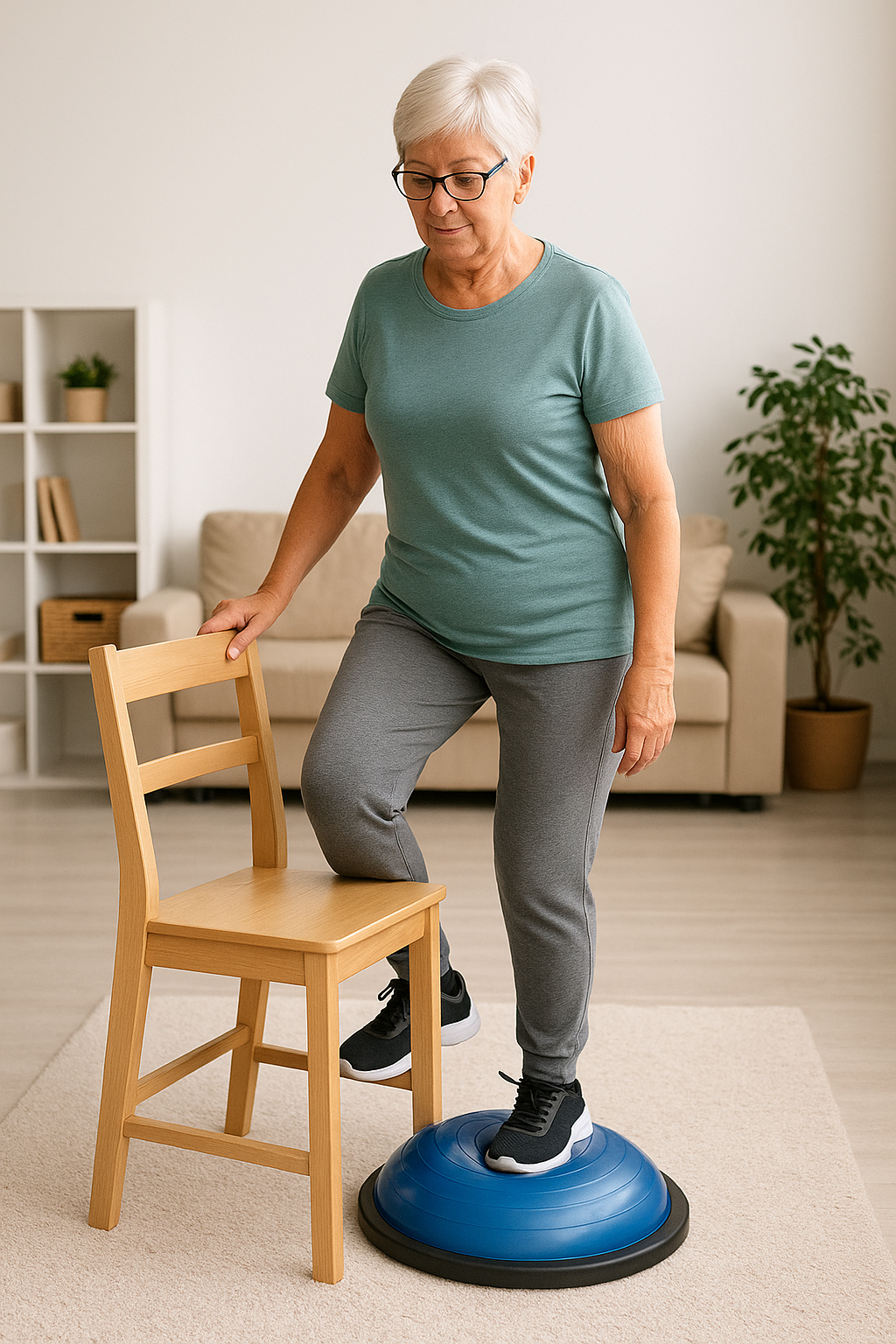
6. Balance Trainer Half Ball (BOSU Style)
Half of a stability ball with a flat base—great for leg lifts, stepping, or seated exercises.
🛒Our Pick:
Bosu Home Gym Equipment The Original Balance Trainer 26 Inch Diameter
Best Uses:
- Standing or seated use
- Dual-function: cardio and balance
- Can be flipped for variety
7. Balance Board with Resistance Bands
These models include bands for upper-body workouts while balancing.
🛒Our Pick:
Yes4All Versatile Wooden Wobble Balance Trainer Board with 360 Degree Rotation
Top Features:
- Simultaneous arm and core training
- Encourages full-body movement
- Ideal for small-space home gyms
8. Foldable or Stackable Balance Platforms
Designed to be flat-packed or stacked after use for small home storage.
🛒Our Pick:
Why It’s Practical:
- No dedicated workout space needed
- Slides under a bed or chair
- Lightweight and travel-ready
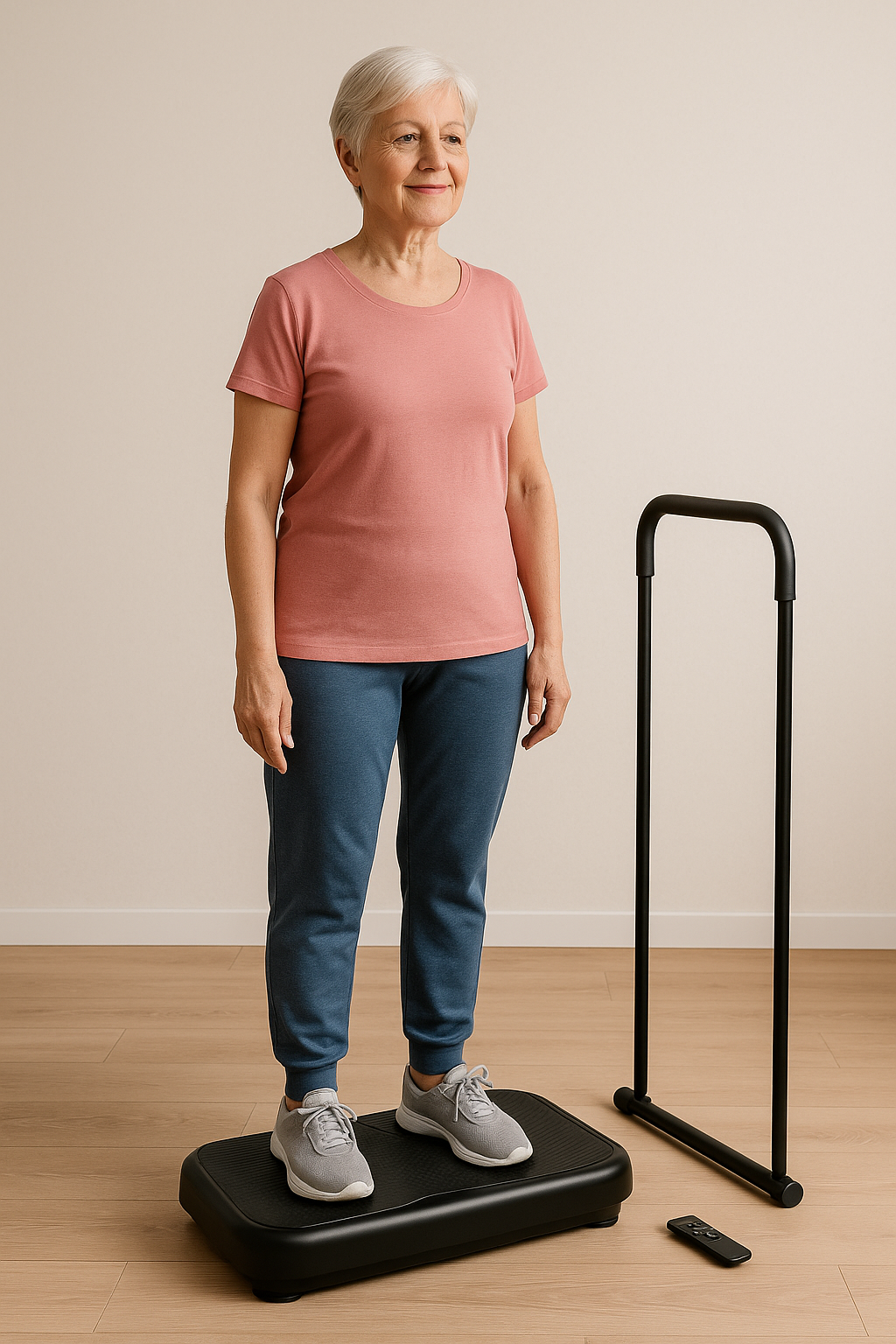
9. Vibrating Balance Platform
Adds vibration to the balance challenge, which may enhance circulation and muscle stimulation.
🛒Our Pick:
Caution:
- Always consult a doctor before using vibration equipment
- Best used with supervision
Safety Tips for Seniors Using Balance Boards
While balance boards are generally safe when used correctly, seniors should always prioritize safety to avoid slips or falls. Here are essential safety guidelines for seniors using balance boards at home:
Choose the Right Board
Not all balance boards are created equal. Seniors, especially those new to balance training or those with existing mobility concerns, should start with beginner-friendly models like foam stability pads, rocker boards, or boards with handles. Avoid advanced models such as curved or high-rise wobble boards until you’ve developed sufficient strength and confidence.
Set Up in a Safe Environment
Always place your balance board on a non-slip surface, such as a yoga mat or low-pile carpet, to prevent sliding. Clear the area of any tripping hazards like rugs, wires, or loose objects. It’s smart to set up your board near a sturdy chair, countertop, or wall for support—especially when you’re first starting.
Use Proper Footwear
Barefoot training is possible with foam or textured boards, but non-slip, supportive shoes are often safer, especially for seniors with reduced sensation in their feet or concerns about foot hygiene.
Start Slowly and Progress Gradually
Begin with short sessions—just a few minutes at a time. Focus on simply standing on the board while holding a chair or countertop. As confidence builds, progress to gentle rocking or shifting movements, and eventually to exercises that challenge your balance further. Never rush the process—mastering balance is about consistency, not speed.
Stay Supervised if Needed
Seniors with a history of falls, dizziness, or recent surgeries should consider having a family member or caregiver present during balance board routines. If you use a vibrating balance platform, consult your doctor first and never use it alone.
Listen to Your Body
If you feel pain, excessive fatigue, dizziness, or unsteady, stop immediately. Consult your healthcare provider before starting any new exercise, especially if you have underlying medical conditions like osteoporosis, severe arthritis, or neurological disorders.
Sample Balance Board Exercise Routines for Seniors
A structured routine using a balance board doesn’t have to be complicated or time-consuming. Here’s a beginner-friendly session that can be repeated 3 times per week for best results.
Warm-Up (2–3 Minutes)
- March in Place: Stand beside a sturdy chair or counter and gently march in place for 1–2 minutes to get blood flowing to the legs.
- Weight Shifts: Stand with feet hip-width apart, gently shift weight from one foot to the other, holding each shift for a few seconds.
Balance Work (8–10 Minutes)
1. Standing Balance Hold (Rocker Board or Foam Pad)
- Stand on the board with both feet.
- Hold a chair or countertop lightly with one hand for support.
- Focus on engaging your core and standing tall for 30–60 seconds.
- Rest, then repeat 2–3 times.
2. Gentle Rocking (Rocker Board)
- Stand with feet shoulder-width apart on a rocker board.
- Rock gently forward and backward, then side to side.
- Repeat 10–12 times in each direction.
3. Seated Core Twists (Balance Disc)
- Sit on a sturdy chair with a balance disc under your hips.
- Place hands behind your head or cross arms over your chest.
- Slowly twist your torso left and right, keeping hips stable.
- Perform 10 repetitions on each side.
4. Single Leg Stand (Foam Pad or Board)
- Stand on the balance pad, holding a chair.
- Lift one foot a few inches off the pad and hold for 10–20 seconds.
- Switch legs. Repeat 2–3 times each side.
Cool Down (2–3 Minutes)
- Ankle Circles: Stand or sit and slowly circle each ankle 5–10 times.
- Calf Stretch: Stand facing a wall, place hands on the wall, step one foot back and gently stretch the calf. Switch sides.
- Deep Breaths: Finish with several slow, deep breaths to relax and center yourself.
Frequency and Progression
- Beginner: 1–2 sets of each exercise, 2–3 times weekly.
- Intermediate: 2–3 sets, 3–4 times weekly, gradually increasing hold times and repetitions.
Final Thoughts
Balance boards are compact, affordable, and surprisingly effective tools for helping seniors stay upright, strong, and independent. With beginner-friendly options like foam pads and rocker boards, anyone can start improving their balance safely—right from their living room.
Browse senior-safe balance boards now at SeniorSafetyToday.com. Stay steady, stay strong.
Learn More with Senior Safety Today
Check out our great resources to learn more:
- 10 Affordable Senior Workout Tools You Can Use Anywhere
- Best Compact Ellipticals for Seniors: Low-Impact Cardio Without the Bulk
- Top Yoga Wheels for Seniors: Gentle Back Openers for Flexibility and Posture
- Top Inversion Tables for Seniors
- Top Hand Exercise Equipment for Seniors: Improve Grip Strength and Dexterity at Home
FAQ: Balance Boards for Seniors
Discover how balance boards can help seniors safely improve stability, core strength, and coordination from the comfort of home.
What type of balance board is safest for seniors?
The safest options include rocker boards, foam pads, and handled balance boards, which offer controlled motion and extra support. For beginners, a foam stability pad like the Foam Stability Pad – Gentle Resistance for Every Level is ideal due to its low profile and cushioned surface.
👉 Related: The Ultimate Senior Safety Checklist: Ensuring a Secure Environment for Your Loved Ones
Are balance boards good for seniors with limited mobility?
Yes. Seniors with limited mobility can start with seated balance exercises using an inflatable balance disc or half ball balance trainer, which support gentle core activation and posture control without needing to stand.
👉 Related: Fall Prevention Tips for Seniors
How do balance boards help prevent falls in seniors?
Balance boards improve proprioception, leg and ankle strength, and core stability—all of which are essential for fall prevention. Regular use builds confidence and body awareness, key factors in reducing fall risk.
Can seniors use balance boards safely at home?
Yes, with the right precautions:
- Use near a wall or chair for support
- Start with low-intensity options like a foam pad or rocker board
- Limit sessions to 10–15 minutes
- Wear shoes with grip or go barefoot on non-slip surfaces
What is the best balance board for small spaces?
Space-saving options like foldable balance platforms or inflatable discs are great for seniors with limited room. Products like the Space-Saver Balance Board – Easy to Store, Easy to Use are ideal for apartments or travel.
Are vibrating balance platforms safe for seniors?
Use with caution. While vibrating boards may enhance circulation and stimulation, they’re not ideal for all seniors—especially those with heart conditions or balance issues. Always consult a healthcare provider first.
👉Related: 10 Affordable Senior Workout Tools You Can Use Anywhere
How often should seniors use a balance board?
Aim for 3 sessions per week, with routines lasting 10–15 minutes. Start slow and build confidence over time. Consistency is key for seeing improvements in stability and coordination.