Affiliate Disclosure:
Some links in this article are affiliate links. If you click and make a purchase, SeniorSafetyToday.com may earn a small commission at no extra cost to you. We only recommend products we believe support the safety, independence, and well-being of seniors.
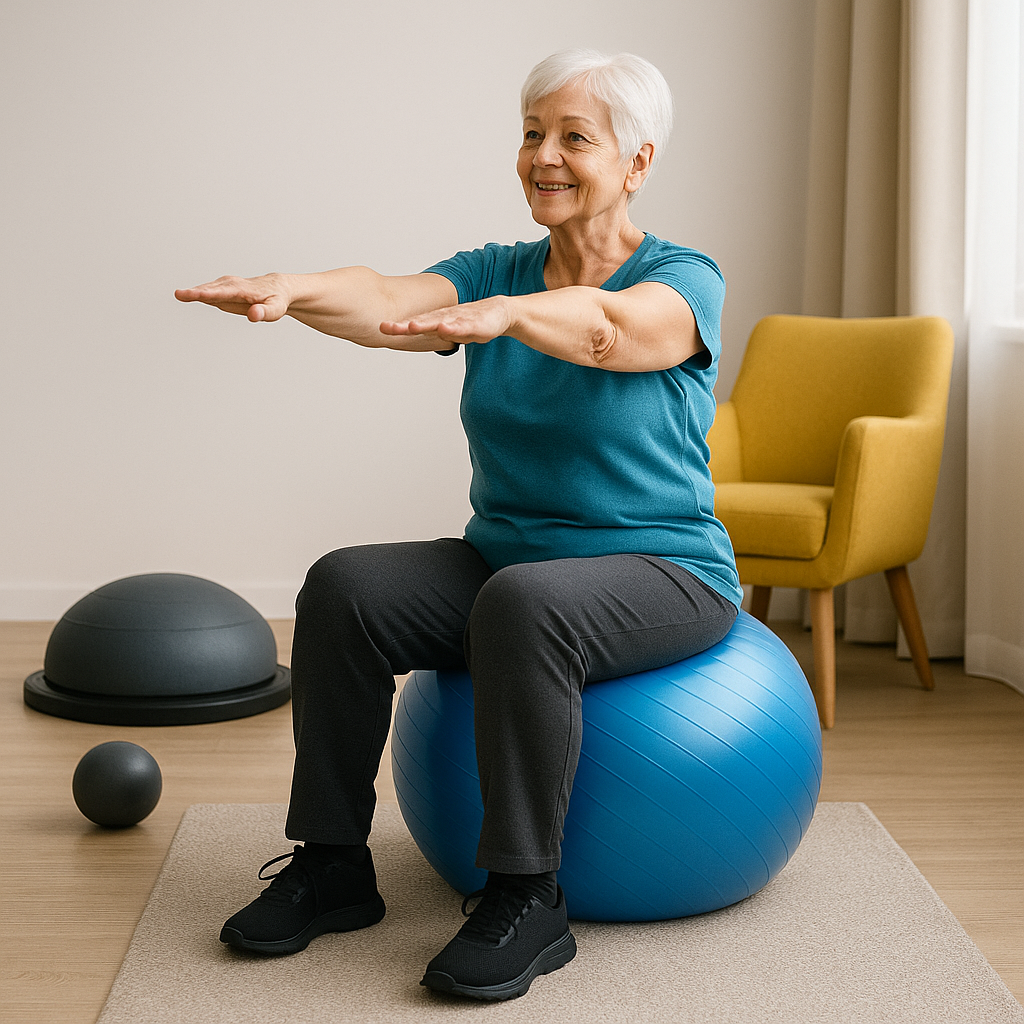
Stability balls can make strength, mobility, and stretching exercises more varied without requiring a home gym. For older adults, however, the safest choice depends on mobility, balance, and the exercise itself. A small Pilates ball used while sitting in a sturdy chair is often a more manageable starting point than sitting on a large rolling exercise ball.
Compare the 10 featured products below by your actual exercise goal, available floor space, comfort, manufacturer’s instructions, and ability to get on and off the equipment safely. Product links are retained for comparison; an included product is not a guarantee that it is appropriate for every older adult.
Benefits of Stability Ball Exercises for Senior Health
Improves Posture and Spinal Alignment
Controlled ball-assisted movements can challenge trunk muscles, but simply replacing a supportive chair with an unstable ball is not proven to improve posture for everyone. Begin with short, comfortable exercises and stop if you develop pain or dizziness.
Boosts Circulation During Seated Movement
Gentle movement breaks can reduce prolonged inactivity. If you’re recovering from injury or have circulation concerns, ask a healthcare professional which movements are appropriate before exercising on an unstable surface.
Reduces Sedentary Time at Home
Instead of sitting on an exercise ball for long periods, take regular movement breaks and use the ball for brief, purposeful sessions. A stable, supportive chair remains the better everyday seating choice for many older adults.
Supports Mental Health Through Gentle Activity
Even mild physical activity releases endorphins. A short session with a stability ball can help reduce stress, anxiety, and promote a positive mood.
Stability Ball Types and Product Recommendations

The options below serve different purposes, from compact inflatable balls for supported seated exercise to full-size stability balls, ball chairs, and specialty training accessories. Review each product’s dimensions, intended use, and safety limitations before choosing. Some linked accessories are not conventional inflatable stability balls.
1. Anti-Burst Stability Ball
Anti-burst designs are intended to limit rapid air loss under specified conditions, not prevent falls or guarantee that a ball cannot rupture. Check the manufacturer’s actual testing and weight rating, inspect the surface before each use, and avoid unsupported sitting if you have balance problems.
🛒Our Pick:
Key Benefits:
- Extra grip for stability
- Durable materials
- Reduces fall risk
2. Stability Ball with Base Ring
A base ring helps limit unwanted rolling, but the ball can still shift or tip when weight is transferred. Verify that the base fits the specific ball and use it only as directed. People with significant balance difficulties may be safer exercising from a conventional chair.
🛒Our Pick:
Why It Works:
- Reduces ball movement
- Great for seated workouts
- Adds confidence for beginners
3. Chair Ball with Back Support
A framed ball chair offers a more contained setup than a loose ball, but it is not necessarily suitable as all-day ergonomic seating. Check the chair’s dimensions, stability, assembly, load limit, and ease of standing before buying.
🛒Our Pick:
Best For:
- Daily use at a desk or table
- Improving posture
- Safe, structured movement
4. Small Stability Ball (Mini Ball)
A small inflatable Pilates ball works well for seated knee squeezes, gentle hand pressure, and supported stretches in tight spaces. The linked ProsourceFit product below is a weighted toning ball rather than an inflatable mini stability ball, so compare it as a separate resistance-training accessory.
🛒Our Pick:
Perfect For Small Spaces:
- Easy to store in a drawer
- No floor workouts required
- Versatile seated exercises
5. Textured or Non-Slip Stability Ball
A textured surface can feel easier to grip, but it cannot make a rolling ball safe on slippery tile or hardwood. Follow the manufacturer’s floor guidance and keep the workout area dry and unobstructed.
🛒Our Pick:
APEXUP Yoga & Pilates Ball – Anti Slip Heavy Duty Gym Ball for Fitness, Balance & Core Workout
Why Seniors Prefer It:
- Extra grip = more confidence
- Reduces the chance of falls
- Helpful on tile or hardwood floors
6. Weighted Stability Ball
The linked product in this section is a slam medicine ball, not a seated stability ball. It is intended for different strength-training movements and may be too heavy or inappropriate for some older adults. Do not sit, balance, or lean on it as though it were an inflatable exercise ball.
🛒Our Pick:
Benefits:
- Easier to control
- Adds stability
- Light strengthening benefits
7. Stability Ball with Resistance Bands
The linked Yes4All product is a half-ball balance trainer with resistance bands, not a standard round stability ball. It can present a much greater balance challenge. Use it only for manufacturer-approved exercises and, if appropriate, under professional supervision.
🛒Our Pick:
Why It’s Smart:
- Cardio + resistance in one
- Excellent for rehab
- Stores easily
8. Burst-Resistant Ball with Pump
A compact inflatable ball with a pump may be practical for travel and storage. The linked ProBody product is a small Pilates ball, best considered for supported exercises rather than as a seat.
🛒Our Pick:
Why It’s Convenient:
- Deflates for storage
- Ideal for travel or small homes
- Re-inflate as needed
9. Stability Ball Instructional Guide
Instructional cards can provide exercise ideas, but the linked NewMe product is a card deck, not a stability ball or evidence of senior-specific instruction. Choose only movements that match your current strength, mobility, and clinician’s advice.
🛒Our Pick:
Best For Beginners:
- Includes seated, lying, and stretching options
- Promotes safety and comfort
- Encourages consistent use
10. Eco-Friendly Stability Ball
If material sensitivities or sustainability matter, review the manufacturer’s published composition and certifications. Do not assume a product is hypoallergenic, latex-free, phthalate-free, or recyclable without documentation for that exact model.
🛒Our Pick:
AGM Group EcoWise Premium Fitness Ball Cherry, 65-cm
Bonus Points:
- Hypoallergenic
- Earth-friendly
- Free from latex and phthalates
Safety Tips for Using Stability Balls as a Senior
Choose the Right Size for Your Height
For a full-size ball, use the manufacturer’s height guidance as a starting point. When seated under appropriate supervision, hips should be roughly level with or slightly above the knees and feet flat on the floor; this does not make unsupported ball sitting safe for everyone.
Inflate to Proper Firmness
Over- or under-inflation can affect your posture and stability. Use a hand pump and follow manufacturer guidelines for firmness.
Use Near a Wall or Chair for Extra Support
For beginners, prioritize exercises performed while seated in a stable chair, with the ball held or placed between the knees. A wall or nearby furniture is not a substitute for direct support or supervision when balance is impaired.
Wear Non-Slip Footwear
Avoid socks or slick shoes—opt for grip socks or athletic shoes with a good sole.
Avoid Slippery Flooring (Use a Mat)
Clear rugs, cords, and clutter from the exercise area. Use a floor surface or mat approved by the equipment manufacturer; never assume a mat will prevent a round ball from rolling or tipping.
How to Choose the Right Stability Ball Size for Seniors
Sizing Chart Based on Height
- Under 5’0”: 45 cm
- 5’1”–5’7”: 55 cm
- 5’8”–6’1”: 65 cm
- Over 6’1”: 75 cm
Choose the size where your knees bend at 90 degrees when seated upright.
When to Use a Mini Ball vs. Full-Size
Mini stability balls (typically 9–12 inches) are best for stretching, squeezing, and behind-the-back support. They’re ideal for seniors with limited space or who prefer seated routines.
Weight Capacity Considerations
Follow each product’s stated maximum user weight and intended application; static load figures and anti-burst ratings are not interchangeable with safe sitting or dynamic exercise loads.
Room Size and Storage Needs
If space is limited, opt for a mini ball or a burst-resistant model that deflates for storage.
Chair vs. Floor Stability Ball Exercises
Seated Movements for Balance and Core
For a beginner-friendly alternative, sit in a sturdy, non-rolling chair and use a mini ball for gentle knee squeezes, hand presses, and supported arm movements. Bouncing, marching, or twisting while seated on a large ball may increase fall risk.
Standing or Floor-Based Workouts for Strength
Advanced users may try wall squats or pushups using the ball. Floor routines like bridges or hamstring curls can further improve balance, but may not be ideal for those with mobility issues.
When to Avoid Getting Down on the Floor
If you have knee issues, arthritis, or difficulty getting up from the floor, avoid prone or supine exercises. Focus on seated or standing movements.
Modifications for Limited Mobility
Using a base ring or placing the ball against a wall reduces rolling and increases confidence. Always have a sturdy chair or support nearby.
Best Accessories to Pair with a Stability Ball

- Non-Slip Mat – Prevents slipping and adds cushioning on hard floors
- Resistance Bands – Adds upper body variety and light strength training
- Stability Ball Base or Stand – Reduces rolling for beginners and seated use
- Exercise DVDs – Provides guided, senior-friendly workouts
- Grip Socks or Supportive Shoes – Increases foot stability and traction
Comparing Stability Balls to Other Senior Fitness Tools
Stability Ball vs. Resistance Bands
While resistance bands focus on strength training, stability balls enhance posture, core engagement, and balance. They can be used together for a full-body routine.
Stability Ball vs. Step Platforms
Step platforms are better for leg strength and cardio, whereas stability balls support the spine and help with mobility and stretching.
Stability Ball vs. Under-Desk Pedals
Pedals improve circulation and leg motion, but stability balls offer more versatility—especially for engaging the core and improving posture.
When to Combine for Full-Body Workouts
Many seniors benefit from using multiple tools in tandem—such as a mini ball for stretching, bands for arm strength, and a step platform for light cardio.
Sample Stability Ball Routine (15 Minutes, Beginner-Friendly)
- Seated Warm-Up (3 min): Sit in a sturdy chair with feet flat; gently roll your shoulders and march in place while holding a small ball securely.
- Strengthening (7 min):
- Seated marching
- Arm raises with resistance bands
- Light torso twists
- Cool Down (5 min):
- Chest opener stretch
- Hamstring stretches with ball support
Repeat 2–3 times weekly for better balance, posture, and strength.
More Senior-Friendly Exercise Resources

For additional guidance, these independent resources explain safe chair-based movement and general exercise recommendations for older adults. They are not specific endorsements of any product listed above.
- NHS: Sitting exercises — illustrated, gentle chair-based movements performed in a stable chair.
- National Institute on Aging: Types of exercise — explains strength, balance, and aerobic activity with examples.
- CDC: Physical activity for older adults — evidence-based weekly activity recommendations and balance guidance.
These exercises are general education, not a substitute for individualized medical or physical therapy advice. A stable chair and a supervised plan may be safer than sitting on an exercise ball if you are prone to falls.
Final Thoughts
The right ball can add variety to a small-space exercise routine, but safety starts with selecting movements you can control. Mini balls used with stable seating are often a sensible first choice; full-size and half-ball equipment call for additional balance and supervision considerations.
Explore the linked products above, compare dimensions and intended uses, and select exercises that fit your abilities. For fall concerns or recent injuries, ask a physical therapist to help design a safe routine before purchasing.
Learn More with Senior Safety Today
Check out our great resources to learn more:
- Fall Prevention Tips
- Best Compact Ellipticals for Seniors: Low-Impact Cardio Without the Bulk
- Top Hand Exercise Equipment for Seniors: Improve Grip Strength and Dexterity at Home
- Top Stationary Bikes for Seniors in Small Spaces
FAQ: Stability Balls for Seniors – Safe, Small-Space Tools for Strength and Balance
What is the best type of stability ball for seniors with balance issues?
For someone with significant balance difficulties, a small Pilates ball used from a sturdy chair is generally a more cautious starting point. A base or ball-chair frame may constrain motion but cannot eliminate falls.
Can seniors use stability balls to improve core strength?
Yes. Stability balls naturally engage the core muscles during seated or movement-based exercises. Even simple tasks like sitting upright on the ball can help strengthen abdominal and back muscles over time.
Are anti-burst exercise balls safe for older adults?
Anti-burst construction may slow air loss under some conditions, but it is not a fall-prevention certification. Check the product’s rated use, inspect it for damage, and avoid unsupported balancing if you are unsteady.
How can small stability balls be used by seniors in tight spaces?
Mini stability balls are perfect for seniors living in apartments or downsized homes. They can be used for seated squeezes, supported stretches, or behind-the-back exercises—and store easily in a drawer or closet.
What are the benefits of using a weighted stability ball for seniors?
Weighted toning balls and slam medicine balls are resistance-training equipment, not alternatives to inflatable stability balls. Their suitability depends on weight, grip, movement, and individual strength; no exercise tool is risk-free.