Affiliate Disclosure:
Some links in this article are affiliate links. If you click and make a purchase, SeniorSafetyToday.com may earn a small commission at no extra cost to you. We only recommend products we believe support the safety, independence, and well-being of seniors.
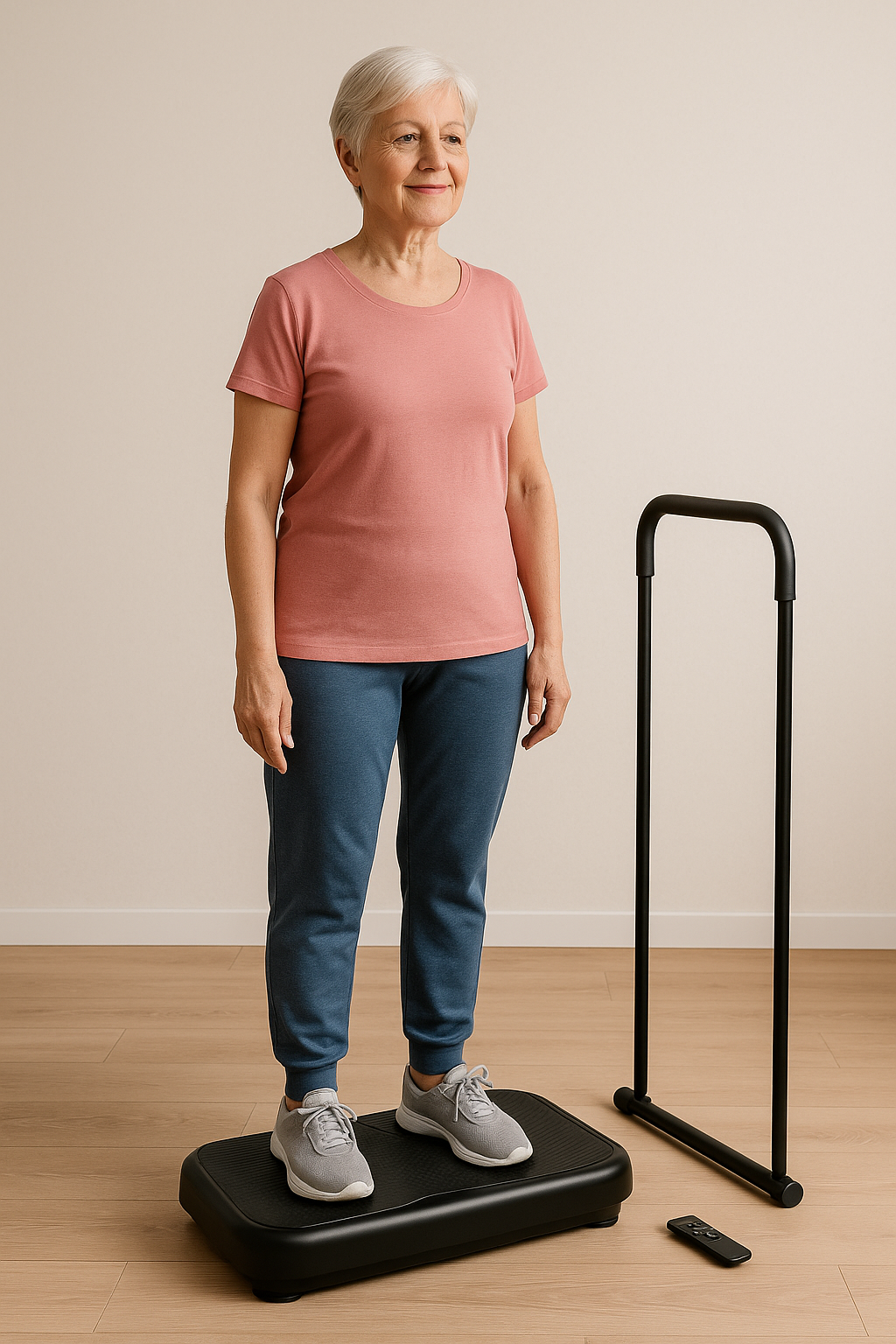
Vibration plates—also called whole-body vibration machines—offer an innovative way for seniors to improve circulation, muscle tone, and even bone density without traditional high-impact exercise. Compact and easy to use at home, these machines gently stimulate the body through rapid vibrations, encouraging muscles to contract and relax naturally.
This guide explores the best vibration plates for seniors, including those with handles, preset speeds, and safety features for balance support.
Contents
- What Are Vibration Plates?
- Benefits of Vibration Plates for Seniors
- Types of Vibration Plates for Seniors
- How to Choose the Right Vibration Plate
- Sample Vibration Plate Routine for Seniors
- Safety Tips for Seniors Using Vibration Plates
- Who Should Avoid Vibration Plates?
- Final Thoughts
- FAQ: Vibration Plates for Seniors
- What is the best vibration plate for seniors with balance issues?
- Can vibration plates help improve bone density in seniors?
- Are vibration plates safe for seniors with arthritis or joint pain?
- How often should seniors use a vibration plate?
- Can you use a vibration plate while sitting?
- What features should seniors look for in a vibration plate?
- Are vibration plates helpful for circulation and swelling in legs?
- Share this:
- Like this:
What Are Vibration Plates?
Vibration plates, sometimes called whole-body vibration machines, are fitness devices designed to stimulate your muscles and joints through gentle, rapid oscillations. Users stand, sit, or place their feet on the platform as it vibrates, causing the body to naturally contract and relax various muscle groups in response.
For seniors, vibration plates offer a low-impact way to exercise and improve wellness from the comfort of home. The technology was originally used for physical therapy and rehabilitation but has become increasingly popular among older adults seeking safe, convenient, and effective ways to support mobility and health.
These machines typically come in a variety of styles, including compact platforms that fit under a bed, models with built-in balance handles, and even portable versions with remote controls. By encouraging small, automatic muscle contractions, vibration plates can help seniors engage their entire body—without strenuous or high-impact movement.
Benefits of Vibration Plates for Seniors
Improved Balance and Stability
Consistent use of a vibration plate helps strengthen stabilizer muscles in the legs, ankles, and core. This can be especially beneficial for seniors who want to reduce their risk of falls. The gentle challenge to balance encourages improved proprioception (body awareness), which is essential for maintaining confidence and independence.
Enhanced Circulation
The vibrations stimulate blood flow and lymphatic drainage throughout the body. For seniors who experience cold feet, swelling in the lower legs, or who spend long hours sitting, regular use of a vibration plate may support better circulation and help decrease discomfort caused by poor blood flow.
Bone Strength and Density
Research suggests that whole-body vibration can help maintain or even improve bone density in older adults. This is particularly important for seniors with osteoporosis or osteopenia, as strong bones are vital for preventing fractures and supporting healthy aging.
Muscle Toning and Flexibility
Vibration plates promote involuntary muscle contractions, helping to tone and strengthen muscles throughout the body, especially in the legs, hips, and core. Many seniors notice increased flexibility and mobility, making daily tasks and activities easier.
Low-Impact Exercise
Unlike jogging, aerobics, or other traditional workouts, vibration plates offer a safe and gentle form of exercise with minimal strain on joints. This makes them accessible even for those with arthritis, chronic pain, or limited mobility.
Types of Vibration Plates for Seniors
1. Compact Vibration Plate with Remote
Small, floor-level platform controlled with a remote for ease of use.
Why It’s Ideal:
- Simple design
- No bending or squatting to operate
- Fits in tight spaces
2. Vibration Plate with Balance Handles
Includes attached handles for added support and safety.
Perfect For:
- Seniors with balance issues
- Those new to vibration therapy
- Standing sessions
3. Seated Vibration Plate
Designed for use while sitting, stimulating legs, hips, and lower back.
Top Benefits:
- Great for limited mobility
- Supports blood flow
- Easy to integrate into daily routine
4. Vibration Plate with Low-Speed Settings
Starts at low vibration levels for a gentler experience.
Best For:
- Seniors with sensitivity to motion
- Early-stage rehab
- Circulation support
5. Tri-Plane or Oscillating Vibration Plate
Moves side to side and front to back for more natural motion.
Ideal For:
- Mimicking walking motion
- Improving leg and core strength
- Training balance
6. Vibration Plate with Resistance Bands
Includes attachable bands for added upper-body workouts.
Top Features:
- Combines cardio and strength
- Ideal for full-body movement
- Keeps routine engaging
7. Vibration Plate with LCD Display
Large, readable screen for speed, time, and program monitoring.
Why Seniors Like It:
- Easy-to-read stats
- Visual guidance
- Great for tech-friendly users
How to Choose the Right Vibration Plate
Selecting the best vibration plate for senior use involves a few key considerations:
1. Size and Portability
Compact platforms are ideal for small spaces or for users who want to store the device out of sight when not in use. Lightweight, portable models with carrying handles are great for shared households or travel.
2. Safety Features
Safety should be a top priority for seniors. Choose a vibration plate with balance handles or a sturdy support bar if you have balance concerns. Anti-slip surfaces and rubberized feet can help prevent accidents, especially for those new to vibration therapy.
3. Program Options and Intensity
Look for machines with adjustable speed and intensity settings, so you can start with gentle vibrations and gradually progress. Preset workout programs or routines can add variety and structure to your sessions.
4. Remote Control and Easy-to-Read Display
A remote control allows users with limited mobility or flexibility to adjust settings without bending or squatting. An LCD or LED display should be large, clear, and easy to navigate.
5. Additional Features
Some models come with attachable resistance bands for upper-body exercise, preset routines for different goals, or tri-plane movement (oscillation in multiple directions). Consider what features match your fitness level and needs.
6. User Weight Capacity
Always select a model with a weight capacity comfortably above your body weight to ensure safety and durability.
7. Read Reviews and Ask for Recommendations
User feedback—especially from other seniors—can offer valuable insights on comfort, ease of use, and long-term reliability.
Sample Vibration Plate Routine for Seniors
A typical routine for beginners or older adults should be short, structured, and safe:
Warm-Up (2 minutes)
- Standing or Seated: Place your feet flat on the vibration plate. Stand with knees slightly bent, or sit comfortably with both feet on the platform.
- Gentle Vibration: Start at the lowest setting to allow your muscles to adapt.
Main Session (8–10 minutes)
- Standing Hold: Maintain a relaxed standing posture with soft knees, holding handles or a nearby chair for support.
- Seated Option: Sit with your feet on the plate, focusing on activating the legs and hips.
- Optional Resistance Bands: Lightly use bands for upper-body movement.
- Interval Change: Every 2–3 minutes, try shifting your stance or alternating between standing and seated (if comfortable).
Cool Down (2–3 minutes)
- Slow Stretching: Step off the plate and stretch your calves, ankles, and hamstrings.
- Deep Breaths: Sit quietly for a minute, breathing deeply to relax and restore your heart rate.
Frequency: Start with 2–3 sessions per week, gradually increasing to 3–4 as your comfort and fitness improve. Never exceed 15 minutes per session at first.
Safety Tips for Seniors Using Vibration Plates
- Start Slow and Low: Always begin at the lowest speed and shortest duration to let your body adapt to the vibrations.
- Use Support: Hold on to balance handles, a sturdy chair, or keep the plate near a wall for extra security—especially during the first few sessions.
- Wear Proper Shoes: Use shoes with good grip and support, or go barefoot only if your plate is designed for it.
- Monitor Session Duration: Limit sessions to 10–15 minutes. Overuse can cause muscle soreness or fatigue, particularly for those new to vibration exercise.
- Stay Hydrated: Drink water before and after your session.
- Listen to Your Body: Stop immediately if you feel dizzy, unsteady, or experience pain. Take breaks as needed.
- Consult Your Doctor: If you have heart disease, joint replacements, or other medical conditions, check with your healthcare provider before starting vibration therapy.
Who Should Avoid Vibration Plates?
While vibration plates are safe for most seniors, they aren’t recommended for everyone. Avoid using a vibration plate if you:
- Have a pacemaker or implanted medical device (the vibrations could interfere with function)
- Are recovering from recent surgery or have open wounds
- Experience severe vertigo, balance disorders, or uncontrolled high blood pressure
- Are pregnant, unless cleared by your doctor
- Have severe osteoporosis, especially with recent fractures
- Suffer from acute deep vein thrombosis or other circulation disorders
If in doubt, always seek professional medical advice before beginning any new exercise program. Safety first!
Final Thoughts
Vibration plates can be a powerful tool for improving senior wellness. From enhancing balance to supporting bone health and circulation, they deliver benefits with minimal effort—and in the comfort of your own home.
Explore the best vibration plates for seniors at SeniorSafetyToday.com. Stand strong, shake gently—live well.
Learn More with Senior Safety Today
Check out our great resources to learn more:
- Fall Prevention Tips
- Best Compact Ellipticals for Seniors: Low-Impact Cardio Without the Bulk
- Top Hand Exercise Equipment for Seniors: Improve Grip Strength and Dexterity at Home
- Top Stationary Bikes for Seniors in Small Spaces
FAQ: Vibration Plates for Seniors
Explore answers to common questions about how seniors can safely use vibration plates to improve circulation, balance, and bone strength at home.
What is the best vibration plate for seniors with balance issues?
Seniors with balance concerns should look for:
- Vibration plates with balance handles for additional support while standing
- Anti-slip surface platforms to prevent slips
- Low-speed models to reduce dizziness or instability
- Seated vibration plates for those unable to stand safely
Using a chair for added support during early sessions is also highly recommended.
Can vibration plates help improve bone density in seniors?
Yes, studies suggest that whole-body vibration can stimulate bone growth and slow bone loss. This is especially beneficial for seniors with osteopenia or osteoporosis, as the vibrations activate muscle contractions that put gentle pressure on bones—similar to the benefits of walking or light strength training.
For more ways to protect bone health and prevent falls, see our article on Fall Prevention Tips for Seniors
Are vibration plates safe for seniors with arthritis or joint pain?
Vibration plates are generally safe for seniors with arthritis—as long as the intensity is low and sessions are kept short. Seniors should look for:
- Gentle oscillating plates that move in natural directions
- Low-speed settings to minimize joint strain
- Seated models to reduce joint loading
- Resistance band options for gentle arm engagement
Always consult a physician before starting a new vibration therapy routine if you have chronic joint pain or inflammation.
How often should seniors use a vibration plate?
A typical routine includes:
- 3–4 sessions per week
- 10–15 minutes per session
- Start on low vibration settings and gradually increase as tolerated
- Include a warm-up and cool-down before and after each session
Consistency is more important than intensity—especially for seniors focusing on balance, strength, or bone health.
👉 Related: The Ultimate Senior Safety Checklist: Ensuring a Secure Environment for Your Loved Ones
Can you use a vibration plate while sitting?
Yes, seated vibration plates are ideal for seniors with limited mobility or balance issues. These models:
- Stimulate blood flow to legs and lower back
- Support gentle movement without standing
- Are great for daily use in front of the TV or at the dining table
- Allow gradual introduction to vibration therapy for beginners
Seated models are also useful for rehabilitation or post-injury recovery.
What features should seniors look for in a vibration plate?
Top features include:
- Remote control for easy operation
- Anti-slip surface for safety
- Balance handles or nearby chair support
- Low starting speed for gentle vibration
- Preset programs for guided sessions
- LCD display for visibility of settings
Choose a model that suits your space, mobility, and comfort level.
👉Related: 10 Affordable Senior Workout Tools You Can Use Anywhere
Are vibration plates helpful for circulation and swelling in legs?
Yes. Gentle vibration encourages blood flow and lymphatic drainage, which may help reduce:
- Swelling in feet or ankles
- Cold limbs from poor circulation
- Discomfort from long periods of sitting
They can be especially helpful when used seated with feet flat on the plate for 10–15 minutes a few times per week.